
Count me in!
Stay up to date with the latest news, announcements, and articles.


The honest answer for an operator running ASICs in 2026 is simpler than the panic suggests: the cryptography that secures Bitcoin wallets is at long-term risk from a sufficiently large quantum computer. The cryptography that secures Bitcoin mining is not, in any practical sense, on the same threat curve. Independent analysts converge on a 3–5+ year window before any meaningful quantum threat to wallets becomes credible — Bernstein’s April 2026 quantum-risk note is the most recent example — and even that estimate assumes attackers will eventually get hardware that doesn’t exist yet.
This article walks through the actual threat model, separates the wallet question from the mining question, and lays out what a US-based mining operator should and shouldn’t do this year.
Aviran Vargas, EZ Blockchain’s Director of Operations, sees the same pattern in client conversations:
I see a tepid concern from the common Bitcoiner, and a higher concern from the technically minded. This is more curious hype than anything else. Before a quantum “hack” can actually be performed, Bitcoin’s security will already have become a quantum fortress — Bitcoin will upgrade in time. Think of it like this: my kids will outgrow their clothes next year, but I’ll buy them new ones before that, and I end up not making it a concern.
A quantum computer uses quantum-mechanical effects — superposition and entanglement — to evaluate certain math problems in fundamentally different ways than a classical computer. The unit of computation is a qubit, the quantum analog of a bit, except a qubit can exist in a probabilistic combination of 0 and 1 until it’s measured. For most problems this is a curiosity. For a small set of specific problems it is a genuine speedup, and two of those problems happen to underpin Bitcoin’s security model.
The first is the discrete-logarithm problem on elliptic curves, which is what protects every Bitcoin wallet signature. Bitcoin uses an algorithm called ECDSA (Elliptic Curve Digital Signature Algorithm) to prove that the holder of a private key authorized a transaction. ECDSA is secure on a classical computer because deriving the private key from a published public key would require, on the order of, billions of years. A quantum computer running Shor’s algorithm can in principle do that derivation in polynomial time. If the quantum computer is large enough.
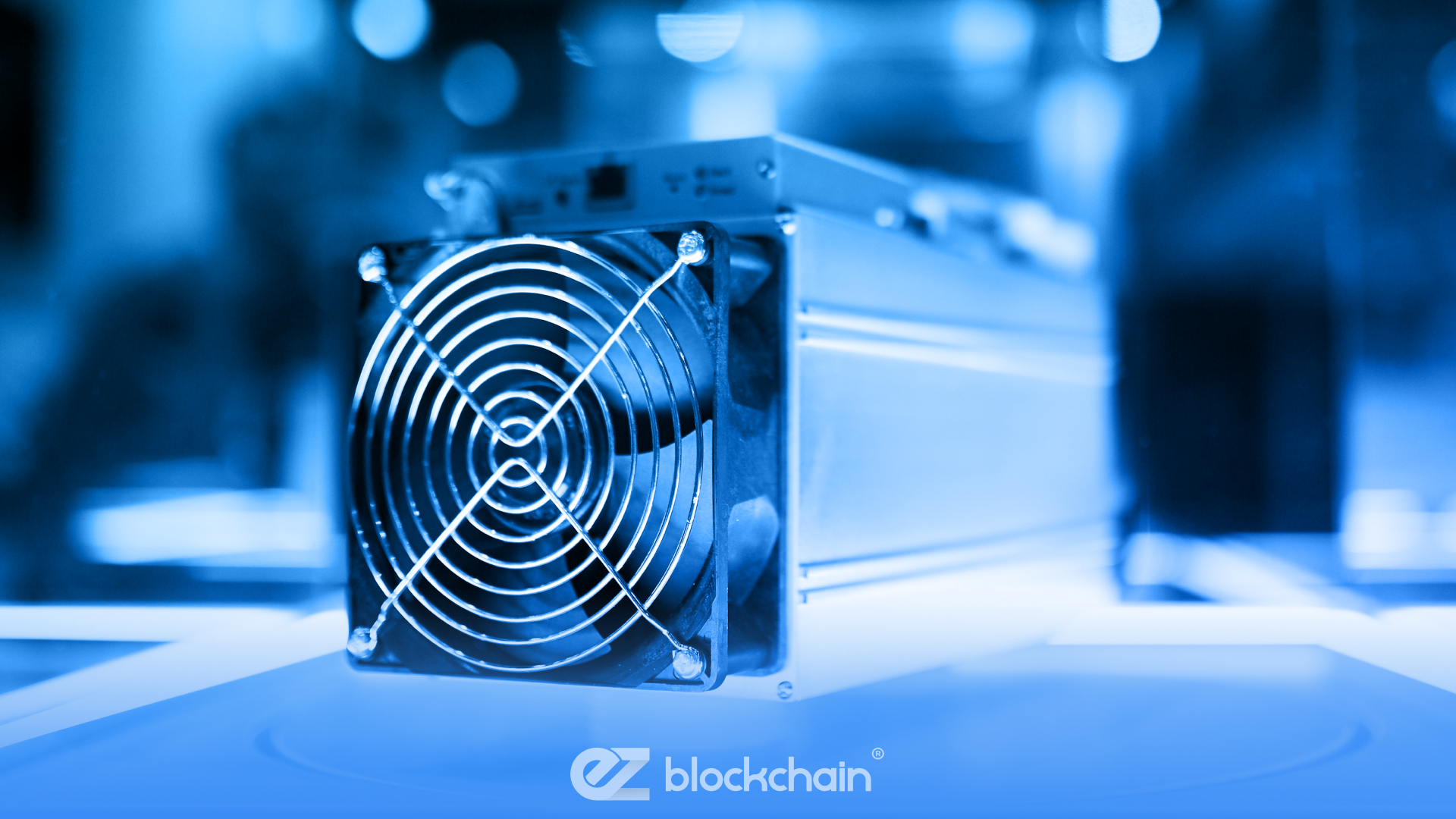
The second problem is finding a SHA-256 hash that meets Bitcoin’s mining target — the Proof of Work a miner does to claim a block. SHA-256 hashing is what your ASIC does eighteen quintillion times a second. Grover’s algorithm can theoretically search a hash space faster than a classical computer, by a square-root factor. That’s a speedup, not a break. The nuance matters, and we’ll come back to it.
The single most important thing to understand: the two problems are different, the two attacks are different, and the practical exposure is wildly different. Conflating them is the source of nearly every overheated headline about quantum and Bitcoin.
Grover’s algorithm gives you, at best, a quadratic speedup on a brute-force search. For Bitcoin mining, this means a sufficiently large quantum computer could find a valid block hash faster than a classical computer running the same search — proportional to the square root of the search space rather than the full space.
The practical impact today is zero. Even optimistic estimates require millions of stable logical qubits for a Grover-based attack to be competitive with the modern ASIC fleet. A logical qubit is a fault-tolerant qubit assembled from many noisy physical qubits using error-correcting codes — typical estimates put the ratio at roughly 1,000 physical qubits per 1 logical qubit, depending on the code and the noise floor.
The leading systems shipping today operate at the level of about a hundred to about a thousand physical qubits. Google’s Willow chip, announced December 9, 2024, has 105 qubits. IBM’s Condor processor, unveiled in late 2023, crossed the 1,000-qubit mark with 1,121 physical qubits, and IBM’s 2025 roadmap projects a 1,386-qubit Kookaburra processor with quantum communication links — three of which combine into a 4,158-qubit multi-chip system. None of those are anywhere near the millions of logical qubits needed for a credible Grover attack on SHA-256, and the gap is large enough that even a decade of aggressive scaling does not close it.
Bottom line: ASIC hashpower remains dominant for the foreseeable future, and that is true under almost any reasonable extrapolation of the quantum hardware curve. Bernstein’s April 2026 note puts it bluntly — Bitcoin mining “is not considered meaningfully vulnerable to quantum attacks.”
Shor’s algorithm is the actual concern, and the concern is structural. Shor lets a sufficiently large quantum computer derive the private key that corresponds to a published ECDSA public key. The risk window, however, is narrower than most “quantum will steal all the Bitcoin” headlines suggest.
Bitcoin addresses do not all expose the public key the same way. Modern address types — P2WPKH (native SegWit) and P2TR (Taproot) — store only a hash of the public key on-chain. The actual public key is revealed only at the moment the funds are spent. So as long as you don’t reuse addresses, your public key never sits exposed on the chain in a queryable form. A quantum attacker would have to act inside the brief mempool window between transaction broadcast and confirmation — a narrow attack surface.
The structural exposure sits in two places: old P2PK outputs (the original Pay-to-Public-Key format used in Bitcoin’s earliest blocks, where the full public key sits in plain view on-chain) and reused addresses (where any address that has been spent from has already revealed its public key). Bernstein’s April 2026 analysis estimates roughly 1.7 million BTC sits in legacy exposed-pubkey outputs, including an estimated 1.1 million BTC attributed to Satoshi Nakamoto’s early P2PK addresses. That is real exposure. It is also extremely concentrated and largely separate from the day-to-day operations of an active mining business.
For more on how different address types handle key exposure, see our explainer on wallet address types and their security implications.
No researcher in this field gives a firm date. The credible ones give ranges, and the ranges have tightened over the last 18 months as both quantum-hardware progress and post-quantum cryptography standardization have accelerated.
The most-cited academic estimate remains Gidney and Ekerå’s 2019 paper “How to factor 2048-bit RSA integers in 8 hours using 20 million noisy qubits” (originally published May 2019, revised through April 2021 in the journal Quantum). The paper isn’t about Bitcoin’s elliptic-curve cryptography directly — it’s about RSA-2048 — but the qubit-count scaling for breaking 256-bit ECDSA is in the same order of magnitude. Twenty million noisy physical qubits is several orders of magnitude beyond anything that exists or has been credibly forecast for the next decade.
More recent industry estimates compress that horizon somewhat. The BIP-360 proposal site, last updated December 2025, summarizes industry roadmaps suggesting quantum computers “may be able to break ECDSA cryptography used in Bitcoin in as little as 2–5 years,” while noting the US federal government’s mandate to phase out ECDSA across federal systems by 2035. Those two timelines bracket the responsible analyst consensus.
Bernstein’s April 2026 note (analysts Gautam Chhugani, Mahika Sapra, Sanskar Chindalia, and Harsh Misra) lands at 3–5 years as the working window for the crypto industry to stand up post-quantum protections — not as a prediction that Bitcoin will be broken in three years, but as a planning horizon for when wallet migrations need to be deployed and tested.
| Threat vector | Classical computer (today) | Quantum computer (today, 2026) | Quantum computer (~5–10 yrs out) |
|---|---|---|---|
| Mining (SHA-256 PoW) | Secure — ASIC economics dominate | Secure — not enough qubits for Grover to beat ASICs | Likely still secure; SHA-256 output can be doubled to 512 if needed |
| Fresh addresses (P2WPKH, P2TR) | Secure | Secure — public key hash, not key, on-chain | Still requires attacker to act inside the post-broadcast mempool window |
| Exposed-pubkey outputs (old P2PK, reused addresses) | Secure | Secure — insufficient qubits for Shor | At risk if logical-qubit counts scale as projected |
| Signature forgery during a pending transaction | Secure (10-minute confirmation window) | Secure | Edge-case risk during mempool window |
Table simplifies a fast-moving field. Sources: Bernstein April 2026 note; Gidney & Ekerå 2019; BIP-360 proposal documentation, December 2025.
Talk to EZ about hosting your ASICs. The quantum horizon is years out. The next halving cycle is now. If your machines are sitting on expensive residential power, hosting economics matter this year, not after a five-year cryptography migration. See where US-based hosting fits or request a free consultation.
The post-quantum work for Bitcoin is well underway and follows the same pattern as previous protocol upgrades — research, BIP, soft fork, opt-in migration. The relevant pieces:
NIST has shipped the standards. On August 13, 2024, NIST released its first three finalized post-quantum cryptography standards: FIPS 203 (ML-KEM, key encapsulation), FIPS 204 (ML-DSA, the primary digital-signature standard), and FIPS 205 (SLH-DSA, a hash-based signature backup). NIST mathematician Dustin Moody explicitly told administrators not to wait: “Go ahead and start using these three.” These are the building blocks any post-quantum Bitcoin signature scheme will draw from.
BIP-360 is the most-discussed Bitcoin proposal. Authored by Hunter Beast, Ethan Heilman, and Isabel Foxen Duke, BIP-360 introduces a new output type called Pay-to-Merkle-Root (P2MR), which removes the public key permanently from on-chain visibility and creates a structure into which post-quantum signature schemes can later be plugged. Proposed candidate schemes from the Project Eleven research group include CRYSTALS-Dilithium (standardized by NIST as ML-DSA in FIPS 204), SPHINCS+ (standardized as SLH-DSA in FIPS 205), and FALCON (standardized separately as FN-DSA, draft FIPS 206 released in 2024). The major tradeoff is signature size: ML-DSA signatures are 2–3 KB, SLH-DSA up to 8 KB, compared to today’s 64-byte Schnorr signatures — block-space pressure is a real cost.
Multiple proposals are in play. A June 2025 review by Project Eleven’s Conor Deegan walks through five distinct proposal families — BIP-360 / P2QRH, Quantum-Safe Taproot, Pay-to-Taproot-Hash (P2TRH), STARK-based signature compression, and commit-reveal schemes. None has activated. Each carries different governance and confiscation tradeoffs (notably whether legacy UTXOs without quantum protection get effectively frozen at activation), which is exactly the slow, contentious deliberation that protocol-level cryptography demands.
Bitcoin has done this before. SegWit activated in August 2017. Taproot activated in November 2021. Both were major cryptographic upgrades shipped via soft fork without breaking older clients. A post-quantum upgrade follows the same well-worn path. Bitcoin has an upgrade mechanism — quantum is, in the engineering sense, a scheduling problem, not an extinction event.
Run the numbers. The payback period on a current-generation ASIC — an S21 Pro or equivalent — is somewhere in the 18–36 month range under normal hosting economics, depending on electricity cost, hosting fees, and Bitcoin price. The quantum threat window for SHA-256 mining, even on the most aggressive analyst timelines, is measured in decades, possibly never. Your machine pays for itself many times over before Grover becomes a relevant variable.
The structural point is the one most worth internalizing: miners earn freshly-minted BTC into freshly-derived addresses. Coinbase outputs go to addresses you control, and a disciplined operator sweeps them onward into clean, single-use addresses. The wallet exposure problem is overwhelmingly a problem of old, dormant coins — coins that were sent into 2010-era P2PK outputs, or coins held in wallets that reuse addresses. An active mining business is structurally insulated from most of that exposure, simply because the BTC flowing through it is constantly fresh.
When miners ask us whether quantum computing should change their hosting decisions, the honest answer at our facilities is simple: no. The halving cycle and your power contract still matter a hundred times more this year.
For the broader strategic context on where ASIC mining is heading through this halving cycle, see our analysis of the changing shape of Bitcoin mining going into 2026 and our deep-dive on post-halving profitability.
Concrete, action-oriented, and short — because the right answer is mostly hygiene plus business focus, not a quantum-readiness program:
One client reached out earlier this year after reading several quantum-scare articles, asking specifically for quantum-resistant hosting and whether he should move his entire operation to a facility with some kind of post-quantum security setup. After walking through his actual numbers, we recommended he stay where he was. His power contract was expiring soon, and the new rate would make or break his margins far more than any quantum threat on the horizon — so we helped him lock in better electricity pricing instead.
Step back from Bitcoin for a moment. The cryptography that protects banking transactions, TLS-secured web traffic, government communications, and most authenticated email is built on the same families of mathematical problems — RSA and elliptic-curve discrete logarithms — that Shor’s algorithm threatens. A quantum-capable adversary doesn’t just challenge Bitcoin; it challenges the entire infrastructure of digital trust. That’s why NIST spent a decade running the post-quantum competition, and why the August 2024 standards release was treated as a major event across cybersecurity, not just crypto.
In that wider picture, Bitcoin is arguably better positioned than most institutions to make the migration, for three reasons. It has a live, motivated developer community working actively on the problem. It has a proven soft-fork upgrade mechanism — SegWit and Taproot are recent examples — that lets cryptographic improvements ship without breaking the network. And the economic incentive to protect roughly $1.3 trillion in BTC market value (per the framing in CoinDesk’s April 2026 reporting on Bitcoin’s quantum-proofing initiatives) attracts disproportionate research attention.
We’re seeing a growing number of miners across the industry begin to factor quantum-computing risks into their long-term hosting plans, and we’re monitoring these developments closely.
No — not for the foreseeable future. Grover’s algorithm provides only a square-root speedup on SHA-256 hash search, not a true break, and even that requires millions of stable logical qubits to be competitive with the existing ASIC fleet. Today’s leading quantum systems operate at roughly 100–1,000 physical qubits. ASIC economics remain dominant under any reasonable extrapolation.
Peer-reviewed estimates place the figure in the range of millions of stable logical qubits for ECDSA, derived by analogy to the 20-million-noisy-qubit estimate Gidney and Ekerå published in 2019 (revised 2021) for breaking RSA-2048. Today’s leading systems are several orders of magnitude smaller, and a logical qubit typically requires roughly 1,000 physical qubits to assemble.
If you use modern address types — Taproot (P2TR) or native SegWit (P2WPKH) — and don’t reuse addresses, your public key never sits exposed on-chain until the moment you spend. For the next 3–5+ years, that is sufficient under current analyst estimates. Older P2PK outputs and reused addresses do carry real long-term exposure.
No firm timeline exists. Bernstein’s April 2026 note frames a 3–5 year planning window for industry migration. Other analyst views and academic estimates extend to 5–10+ years; some independent researchers argue 10–20 years remains plausible. The right posture is to track the field, not predict it.
No. ASIC payback periods are measured in 18–36 months under normal economics; quantum threats to SHA-256 mining are measured in decades. The halving, your electricity cost, and your hosting setup are far more urgent levers on profitability this year. Quantum is a wallet question for the broader ecosystem, not a mining question for an active operator.
Technical accuracy note: claims about qubit thresholds, Shor and Grover algorithms, BIP-360 design, and NIST post-quantum standardization are sourced inline from Bernstein’s April 8, 2026 quantum-risk note (via Cointelegraph reporting), Gidney & Ekerå (2019/2021), the Google Willow announcement (December 2024), IBM Quantum’s 2025 roadmap, NIST FIPS 203–206 documentation, the BIP-360 proposal site, and Project Eleven’s June 2025 post-quantum review. Readers are encouraged to verify each claim via the cited primary sources. EZ Blockchain provides hosting infrastructure, not cryptographic consulting.
This article summarizes publicly available research as of April 2026. Estimates, timelines, and technical claims cite their sources in-line. EZ Blockchain is a Bitcoin mining hosting company; we do not provide cryptographic consulting or post-quantum security services. References to hosting services reflect offerings we provide today, not future-proofing against the threats discussed.
Talk to EZ about your ASIC economics this year. The quantum horizon is a question the whole industry is working on — your hosting bill is a question you can solve in a single conversation. Request a free consultation and we’ll walk through what your fleet looks like at US-based hosting rates.
Fill out a form and our bitcoin mining expert will contact you.
FREE CONSULTATIONFill out a form and our bitcoin mining expert will contact you.