Count me in!
Stay up to date with the latest news, announcements, and articles.
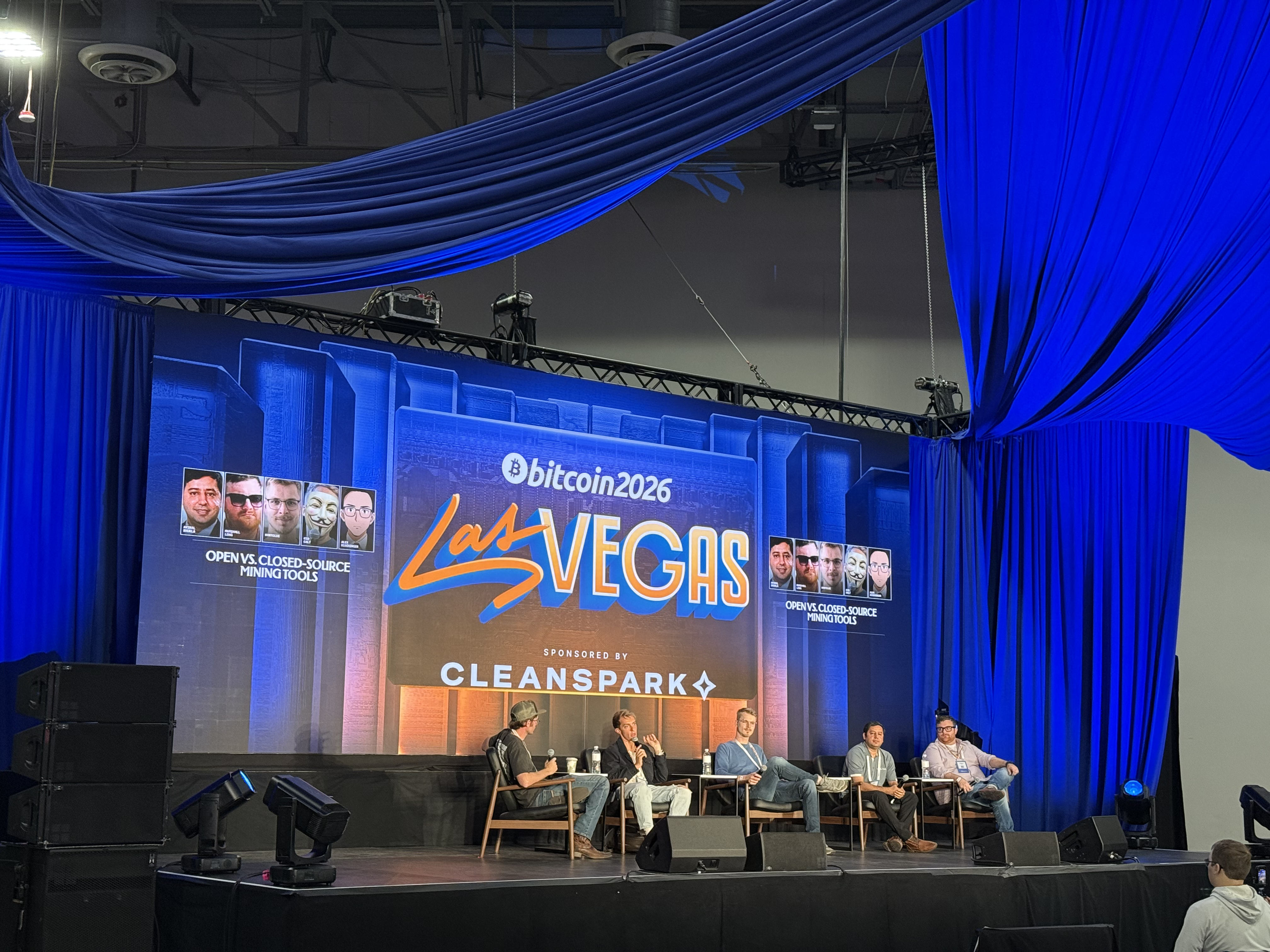
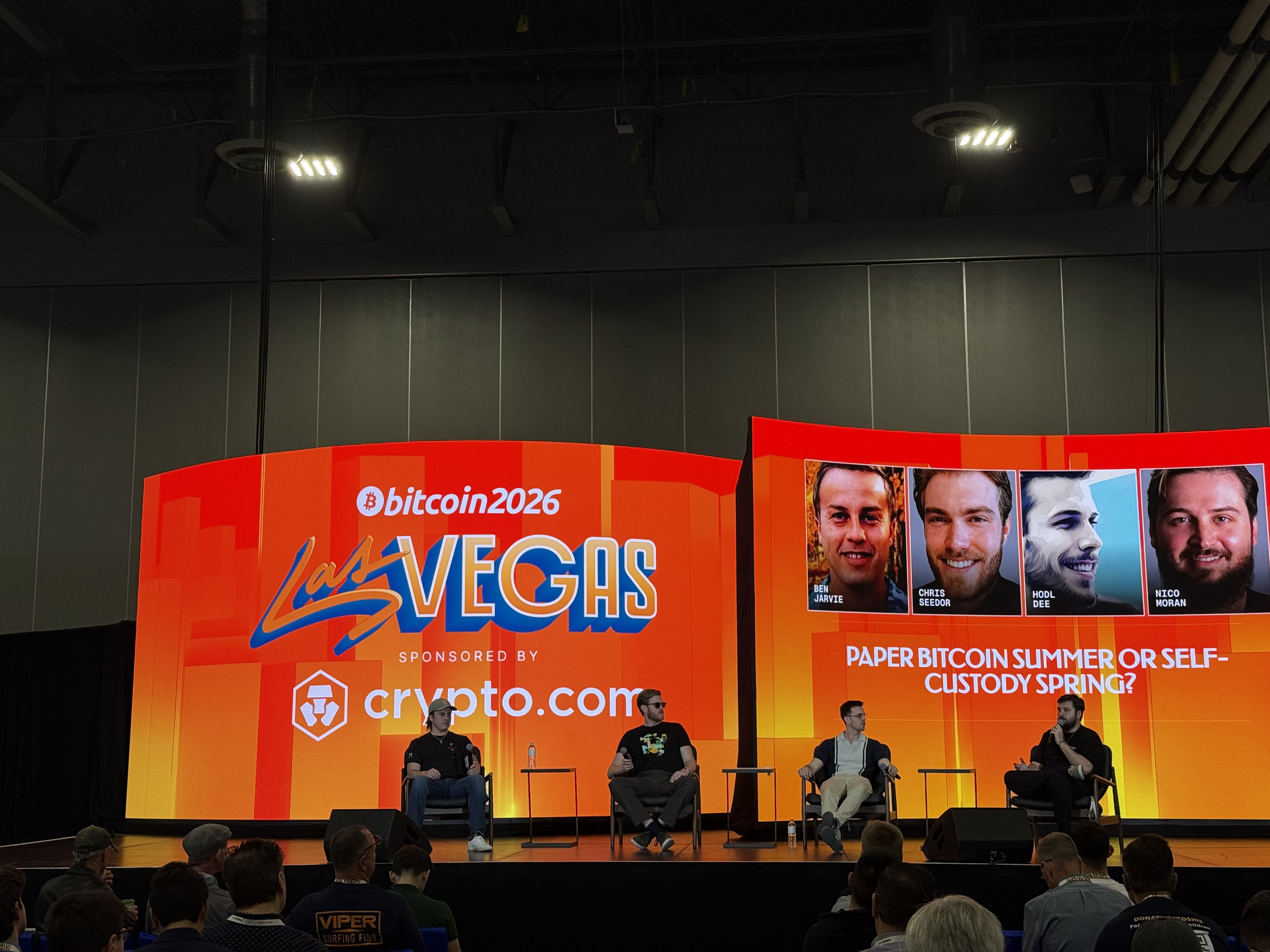
Most recaps published this week are highlight reels — Saylor said this, the SEC chair said that. This is a different cut. Below are seven trends our operations team actually tracked, with a concrete takeaway after each one for anyone running ASICs today, or thinking about it.
The through-line: the mining industry is restructuring around three vectors at once — regulatory clarity, mixed-use data centers, and operator consolidation. Each of the seven trends below sits on at least one of those vectors, and a few sit on all three.
What stood out to me personally on the floor was how strongly the conversation has moved toward AI, energy, and data center infrastructure integration with Bitcoin—this was far less visible in 2024/2025. Also, large-scale operators and investors approached discussions with a much stronger focus on execution—specific timelines, costs, and deployment plans—rather than exploratory or high-level ideas. Compared to previous years, there were fewer conceptual conversations and more emphasis on deals that are ready to move forward. – Anastasia Tykhonova
The most-watched moment of the week was SEC Chair Paul Atkins addressing the conference on Monday, April 27 — the first sitting SEC chairman to ever take a Bitcoin-conference stage, per news.bitcoin.com’s coverage of the speech. His remarks centered on Project Crypto, an SEC-wide initiative announced in late 2025 to modernize digital-asset rules.
The Atkins speech itself was symbolic — broad framing of how the agency now thinks about digital assets, not a mining-specific policy reveal. The substantive piece for miners actually landed earlier, in SEC press release 2026-30, when the agency clarified the application of federal securities laws to crypto assets and explicitly addressed protocol mining and protocol staking. That guidance establishes a five-category token taxonomy under Project Crypto, four of which sit outside the securities framework. Sidley Austin’s November 2025 analysis explains the rule architecture in depth.
For Bitcoin miners, this is the first time a US federal regulator has put protocol mining on the record as a non-securities activity. That doesn’t make mining unregulated — KYC, AML, sanctions, tax, and energy-market rules all still apply — but it removes a specific overhang that has discouraged institutional capital from allocating to mined-not-bought BTC strategies.
The caveat: formal SEC rule proposals are still pending. Guidance is not law, and the next administration could revisit the framework. But the on-stage moment at Bitcoin 2026, paired with the March 2026 guidance, marks a clean directional shift.
What a hosted miner should do: revisit jurisdiction in your hosting decisions. “US-domiciled” now carries a regulatory premium it didn’t 18 months ago. If you’ve been hosting offshore for tax-only reasons, the math has shifted — the compliance discount on US-based hosting has narrowed.
In 2024 and 2025, the headline was “miners pivoting to AI.” At Bitcoin 2026, the framing on every infrastructure panel was “we run mixed-use data centers.” That word change matters.
According to S&P Global Market Intelligence’s February 2026 analysis, public miners IREN, Core Scientific, and TeraWulf are now almost entirely focused on high-performance computing development — analysts forecast HPC drives most of those companies’ top-line growth in 2026. MARA Holdings paired its existing Bitcoin treasury strategy with an AI-data-center deal with Starwood that CoinDesk reported in late February 2026.
What we saw on the floor matched that. Hosting-infrastructure sponsors — including Acehost (Tampa, Durham), ACTBOXES (200 MW-plus delivered, 98%-plus uptime), and others — were openly advertising co-location for “AI, ML, and Bitcoin mining” in the same breath, not as separate product lines. The customer decides workload split between BTC ASICs and AI/HPC racks; the host sells power and cooling.
This shift has real implications for ASIC tenants:
One caveat for small operators: GPU clusters are not a small-operator product. Minimum economic units start in the multi-megawatt range, and the deals you read about in trade press are eight- and nine-figure infrastructure commitments. The trend matters to hosted ASIC clients indirectly — through the financial health of the host, not by becoming an AI customer themselves. For more on the AI-vs-mining decision at the infrastructure layer, see our earlier piece on AI high-performance compute versus Bitcoin mining.
Bitcoin opened the conference at roughly $79,000 on April 27, an intraday peak that news.bitcoin.com flagged as a notable on-stage backdrop. By Wednesday afternoon, BTC had drifted to about $75,500. Hash price — the per-PH/s daily revenue metric every operator watches — did not meaningfully respond to either the spike or the drift.
That confirms what we’ve been writing about for months: the binding constraint on the marginal Bitcoin miner in 2026 is efficiency (J/TH), not BTC spot price. A 4–5% BTC bump no longer brings older fleets back online. The roughly 252 EH/s of older miners that came offline in Q1 2026 stayed offline through the conference.
The implication for fleet decisions:
For a fuller picture of how the industry got here, our earlier piece on Bitcoin mining in 2025–2026 walks through the efficiency-floor thesis. The shopping-list view sits in our Best ASIC Miners to Buy in 2026 piece.
Where the largest publicly traded miners are putting capacity, based on stage commentary at the conference and recent SEC filings.
| Public miner | Self-mining BTC focus | AI/HPC focus | Hosting / co-location | 2026 narrative on stage |
|---|---|---|---|---|
| IREN | Reduced | Primary | Limited | “We are an HPC company that mines Bitcoin” |
| Core Scientific | Reduced | Primary | Maintained | HPC-first; BTC mining as flexible-load workload |
| TeraWulf | Reduced | Primary | Limited | Aggressive AI buildout; BTC margin-dependent |
| MARA Holdings | Maintained | Growing (Starwood deal) | Limited | Bitcoin treasury plus AI infrastructure |
| Riot Platforms | Maintained | Growing | Limited | Mixed model; flexible-load focus |
| HIVE Digital | Reduced | Growing | Limited | HPC-driven growth |
Mix is directional, not financial. Verify exact splits in each company’s latest 10-Q. Sources: S&P Global Market Intelligence (February 2026), CoinDesk (February 2026), and Cointelegraph 2026 outlook coverage.
What a hosted miner should do: re-benchmark your fleet against current hash price, not against BTC headlines. Most hosted-mining math errors in 2026 come from anchoring to Bitcoin spot price instead of revenue per terahash.
Talk to EZ Blockchain about hosting
Efficiency, not spot price, decides who stays online in 2026. The lever you can move this quarter is hosting cost. Get a free consultation on hosting your fleet at our US facilities.
The institutional track at Bitcoin 2026 highlighted that the pipeline of public companies considering Bitcoin treasury strategies has tripled since 2024 to roughly 200 worldwide. Strategy (formerly MicroStrategy) remains the canonical example, but the tail has lengthened — mid-cap operators are visibly normalizing the playbook.
Why miners care: treasury demand is demand for BTC. Every public company that buys BTC is a buyer that doesn’t have to mine. That’s both bullish (price support over multi-year horizons) and structural (hosted-mining clients now compete with corporate treasuries for the same coin in any given month).
The hosting-adjacent angle showed up in hallway conversations more than on stage. Custody, treasury infrastructure, and corporate-BTC operations are becoming a service tier next door to hosted mining. Some hosts are quietly building treasury-services bundles — “we host your ASICs and custody the BTC you mine.” EZ Blockchain does not currently offer custody, but the floor showed clearly that the market expects integrated services from hosting partners over time.
What a hosted miner should do: if you’re a corporate-treasury candidate yourself, mined-not-bought BTC has tax and basis advantages worth modeling. If you’re a retail-scale operator, recognize that institutional inflows are now the dominant demand factor — your fleet’s revenue is increasingly a function of corporate buy-side behavior, not retail sentiment.
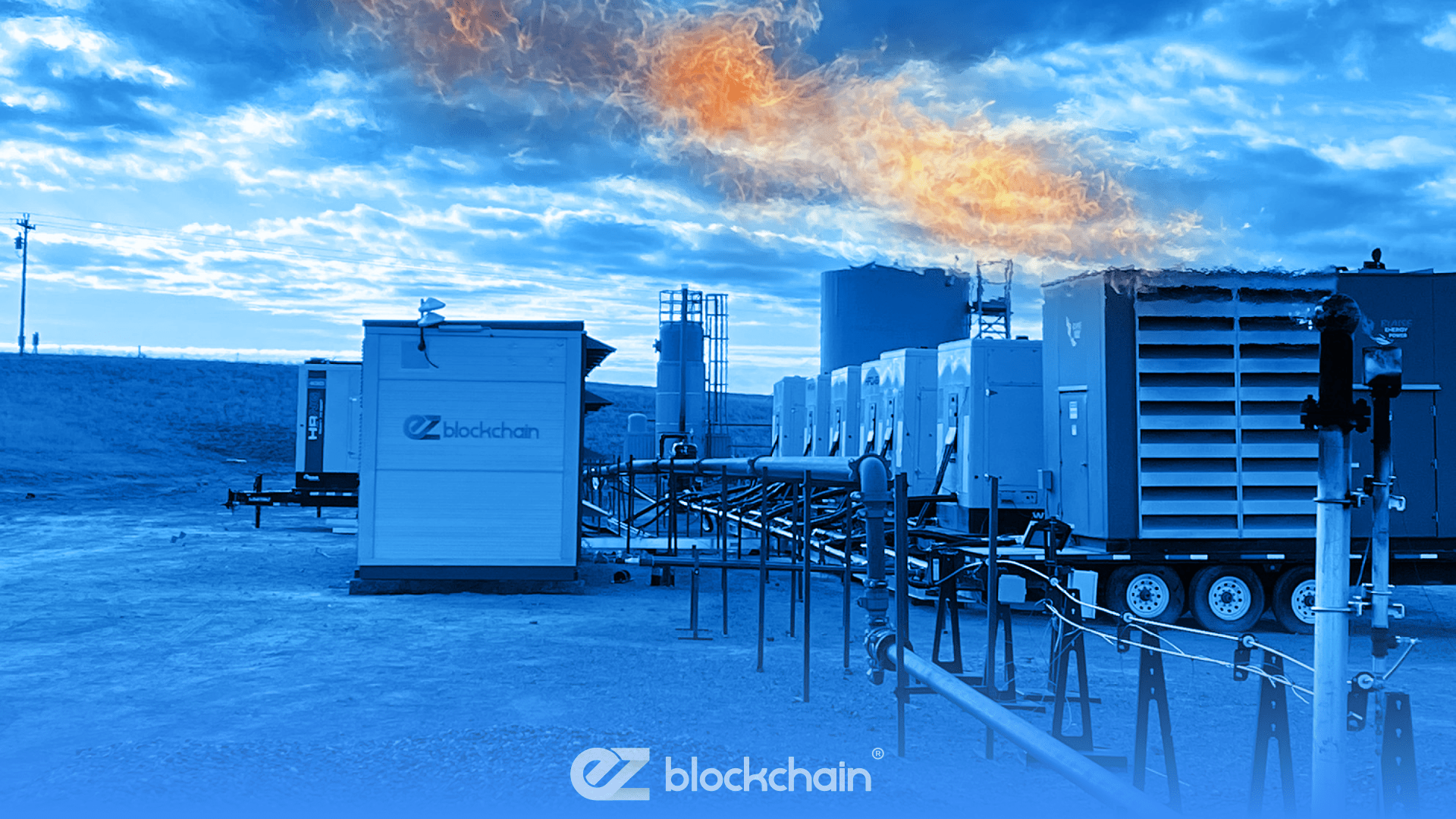
Flare-gas mining was a 2021–2022 talking point. At Bitcoin 2026, it was a vendor track — multiple sponsors with operational gas-to-hash builds, real uptime numbers, and unit economics in slide decks rather than press releases.
What’s genuinely new about the 2026 framing:
Lightspark CEO David Marcus used Bitcoin 2026 to launch Grid Global Accounts — a dollar-denominated payment layer built on Bitcoin Lightning, connecting to 175 million Visa merchants across 33 countries and reaching 65 nations in real time, per news.bitcoin.com’s launch coverage.
Most coverage of Grid framed it as a retail and merchant-payments product. The angle that didn’t get covered: mining-payout rails today are slow and FX-expensive, especially for non-US operators. Grid is the first credible Lightning-as-payout-infrastructure product at scale. It’s not for retail-scale solo miners, but for hosting operators and pool operators it’s a meaningful upgrade to settlement plumbing.
What changes operationally if Grid (or a comparable layer) is adopted by pools and hosts:
The structural trend visible across the conference floor was a clear barbell. Public miners scaling to gigawatt-class buildouts. Retail and home miners surviving on niche economics. The middle is hollowing out.
The forces are not subtle. Q1 2026 saw roughly 252 EH/s of older miners come offline. Public miners absorbed share through M&A and direct buildout. Small operators either turned off or moved to hosted. The mid-size, formerly self-managed 1–10 MW operator is the segment under the most pressure.
The rationale stack we heard from operators making the switch:
Over the past two years, some of our customers have left to launch their own self-mining operations. To be fair, a few succeeded—but those were large, well-capitalized industry players. For mid-sized operators, the outcome has often been different. In one case, a company left after being offered a very attractive electricity rate by a utility. Two years later, they returned—not only had the promised pricing failed to materialize, but their actual costs ended up significantly higher, compounded by ongoing operational expenses and complexity. – Anastasiia Tykhonova
What a hosted miner (or self-miner considering hosting) should do: if you’re running below 10 MW and self-managing, the 2026 economics no longer favor self-mining for most operators. Run a hosted-cost comparison this quarter, not next year. The Q4 calendar fills up fast.
The headline moment was SEC Chair Paul Atkins becoming the first sitting chairman to address a Bitcoin conference. The substantive policy piece for miners was the SEC’s separate March 2026 token-taxonomy guidance, which explicitly classified protocol mining as a non-securities activity — the first time a US federal regulator has put that distinction on the record.
Structurally, yes. Public miners are now primarily AI/HPC operators that mine Bitcoin as a flexible-load workload, which makes mixed-use hosts (power and cooling for both ASICs and GPU clusters) the dominant infrastructure model going forward. Single-product BTC-only hosts will increasingly be priced out on capital and energy terms.
Hash price stayed flat in the compressed band that has held since Q1 2026. A 4–5% BTC bump no longer brings marginal hashrate online — efficiency (J/TH) is the binding constraint, not spot price. Older fleets that came offline in Q1 stayed offline. For a deeper read on the cycle, see our piece on whether crypto mining will stay profitable in 2026.
Run a hosted-versus-self-mining cost comparison this quarter. The conference confirmed that mid-size operators (1–10 MW) are increasingly moving to hosted because the 2026 economics — energy purchasing, capital efficiency, regulatory clarity, workload-mix optionality — favor it. Self-mining at this scale is harder to justify than it was 18 months ago.
Anastasia Tykhonova
Marketing Director, EZ Blockchain
LinkedIn https://www.linkedin.com/in/tykhonovaanastasiia/
EZ Blockchain operates 60 MW of Bitcoin mining infrastructure across Georgia, Kansas and South Carolina, and provides hosting services to clients. This article discusses hosting services we offer, alongside regulatory and industry developments observed at Bitcoin 2026 Las Vegas. Claims about uptime, pricing, and facility capacity reflect our own operations. This article is for informational purposes only and does not constitute legal, tax, or regulatory advice. The author is not a licensed attorney or tax advisor.
Talk to EZ Blockchain about hosting your fleet
If you’re rebenchmarking your operation after Bitcoin 2026 — efficiency, energy cost, regulatory exposure — talk to us about hosting. Get a free consultation on US-based mining-hosting capacity.
Fill out a form and our bitcoin mining expert will contact you.
FREE CONSULTATIONFill out a form and our bitcoin mining expert will contact you.